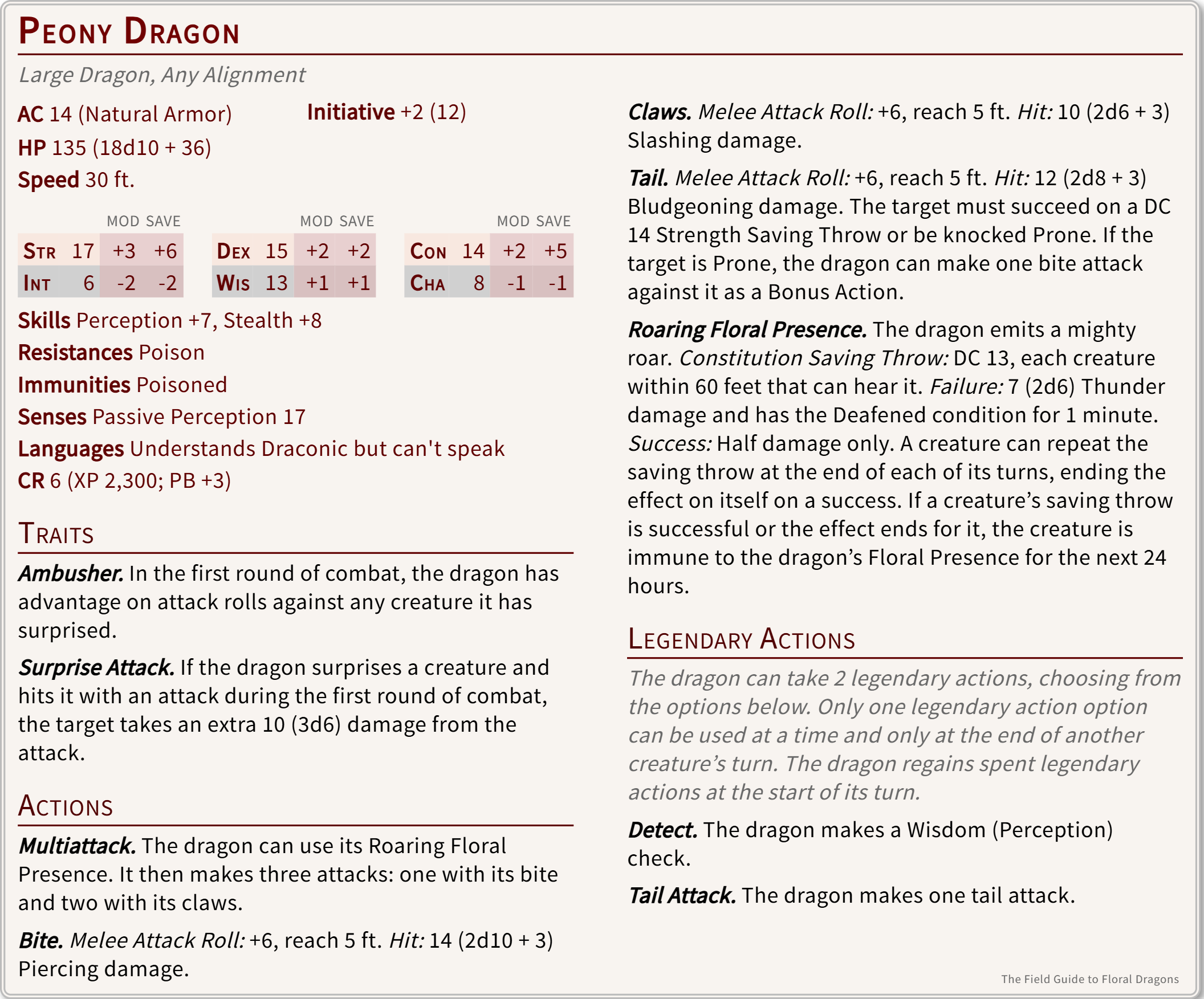
Hit Point Press
Amina
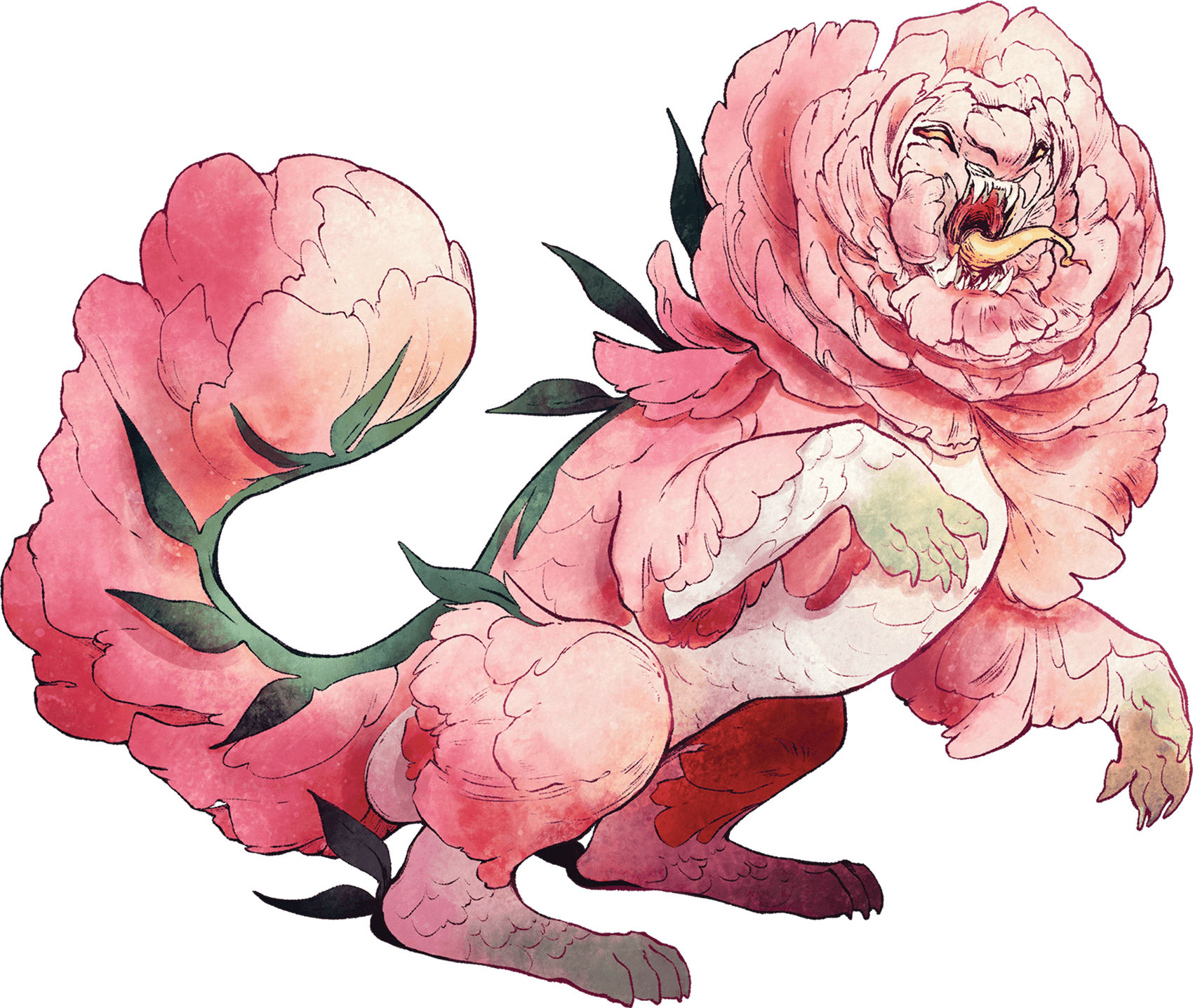
Peony dragons have a fearsome roar.
The Resilience of the Peony Dragon
Long ago, the peony was the favored flower of an imperial dynasty. The ruling family believed that as long as the peony bloomed in their kingdom, the realm would remain beautiful and beloved by the gods. They held a ceremony on the first day of summer where people would come from across the land to see the flowers bloom so the flowers would bless the emperor and their kingdom.
For generations, the imperial household enjoyed peace and harmony until one young empress took the throne. A forceful and ambitious ruler, she vowed to show her might by exerting her will over the magical flowers. She broke the tradition of her ancestors and held the flower viewing ceremony on the first day of winter. That day, the empress ordered one hundred species of flowers to open their petals for her. The flowers wavered in fear and did as the empress commanded, but the resilient peony refused to open until it was ready.
The empress ordered her attendants to burn the rebellious peonies. The following year, the flowers grew back as mighty peony dragons. Instead of blessing the royal family, the gods had blessed the peonies, granting them sharp teeth, strong, stem-like spines, and formidable size. Ever since, peony dragons have roamed the land, and they still possess the independent spirit of their flower ancestors.
Amina
I saw a beautiful field of uncommonly tall peonies, and I couldn’t resist taking a stroll through them. I didn’t notice the dragon among all the flowers until it rose up on its hind legs, unleashing the most terrifying roar.
I wanted to run, but I put my hands up and looked it in the eye, backing away slowly. Seeing this, the dragon seemed to calm down.
After I backed away from it, the dragon turned tail and disappeared into the thicket. I couldn’t explain why it didn’t eat me, but I am certainly not complaining!
Physiology
Caption
Fig. 1 A peony dragon claims its territory with a roar
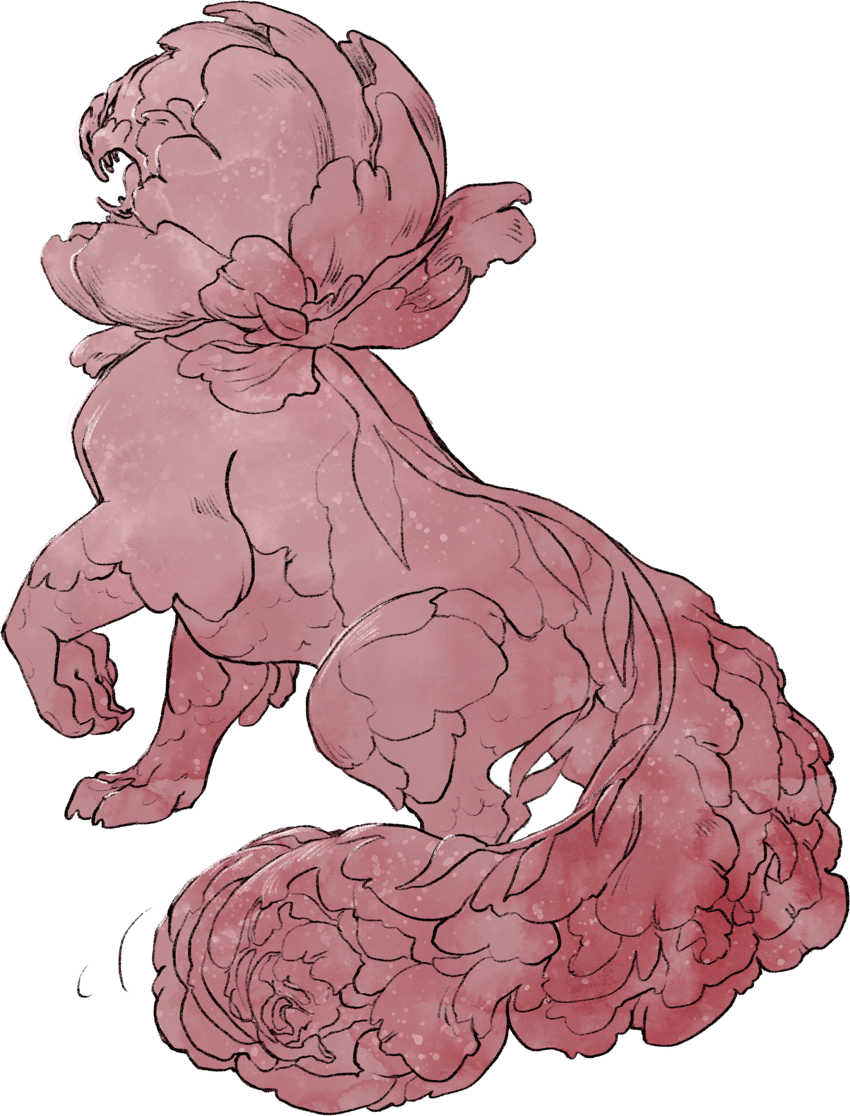
Peony dragons are hefty creatures that can grow up to 15 feet long and weigh as much as 450 pounds. They have fluffy, round petals that protect their heads. Their blossoms come in vibrant colors, including pink, red, orange, and yellow. When they sleep, peony dragons close their petals over their faces. They keep the same petals year-round and shed them on average four times throughout their 100-year lifespan. When this happens, the petals shrivel and fall off, leaving the dragon vulnerable until its petals grow back over ten to fourteen days. Young peony dragons hatch with white petals, which flush into their adult colors as they mature at around 15 years old.
As predators, peony dragons use their thick tails as powerful weapons to effortlessly knock their prey to the ground. They have sharp teeth and claws, which make them formidable hunters. To stake their claim on an area, peony dragons roar loudly. Once they have established their presence, they continue to roar on occasion to remind other creatures of their dominance. In contrast, during hunts away from their lairs, they are silent to avoid revealing their position to their prey.
Habitat
Peony dragons like to nest in grasslands with plenty of shrubs and rocks that serve as natural defenses. They make their homes by digging dens in the ground and share a symbiotic relationship with vespons that pollinate their dwellings and keep their petals clean. Over time, tall peonies bloom in the vicinity of their lair, which provide camouflage to stalk prey and ambush intruders. The magic that makes the flowers hardier than ordinary peonies also helps them grow unnaturally large. This makes these flowers especially sought-after for alchemical purposes.
Once peony dragons run out of space to grow flowers around their lairs, they migrate in search of a new location to overtake. Since the tall peonies remain long after the dragons abandon their dens, humanoids are often found reaping the flowers left behind. Peony dragon essence is a key ingredient in many tonics, and some mages use it in abjuration spells to enhance the strength of their barriers. The dragons are territorial, so many humanoids will wait until the peony dragons have moved on to harvest the flowers. However, in times of desperation, harvesting the flowers from active dragon lairs is a necessary danger.
Behavior
Peony dragons raise families collectively in groups known as bloomings. Adult peony dragons typically mate within their blooming, but some venture into the forest encounter others of their kind during hunts. All Peony dragons have the ability to produce eggs, which they take back to their blooming to hatch and raise. The adults are highly involved in their wyrmlings’ upbringing. Once the wyrmlings are old enough to run, the adults teach them to hunt near the safety of the lair.
The tall peonies that grow around a peony dragon’s lair provide the perfect camoflauge for the natural stalkers and ambush predators. Hidden among the dense flowers, they are almost indistinguishable as they sneak up on their prey and knock it to the ground before landing a killing blow with their sharp claws and teeth.
Peony dragons bring prey back to their lair for the blooming to share. They usually only hunt when they need a meal, but a creature that encroaches on the peony thicket around the lair will be chased off. They are highly protective of their bloomings. If an intruder fights back, a peony dragon won’t hesitate to kill.
Since peony dragons and larkspur dragons are both territorial of their favored terrain, they are natural enemies. Peony dragons are one of the few creatures that can endure a larkspur dragon’s poison, and their heavy tails can smack the spindly rival to the ground—if they can land a hit. A larkspur dragon engaged with a peony dragon in combat will try to avoid the peony dragon’s thick tail with its superior speed and agility, taking flight if necessary to attack the terrestrial dragon from above.
Despite the territorial nature, it is possible for humanoids to have a friendly relationship with local blooming of peony dragons. If they witness a humanoid caring for plants, or otherwise taking care not to damage the environment with their activities, the dragons may leave them alone and hunt elsewhere. If the same humanoid returns multiple times and continues to behave respectfully, the peony dragons may recognize them as a friend and allow them to take flowers from around their den.
Amina
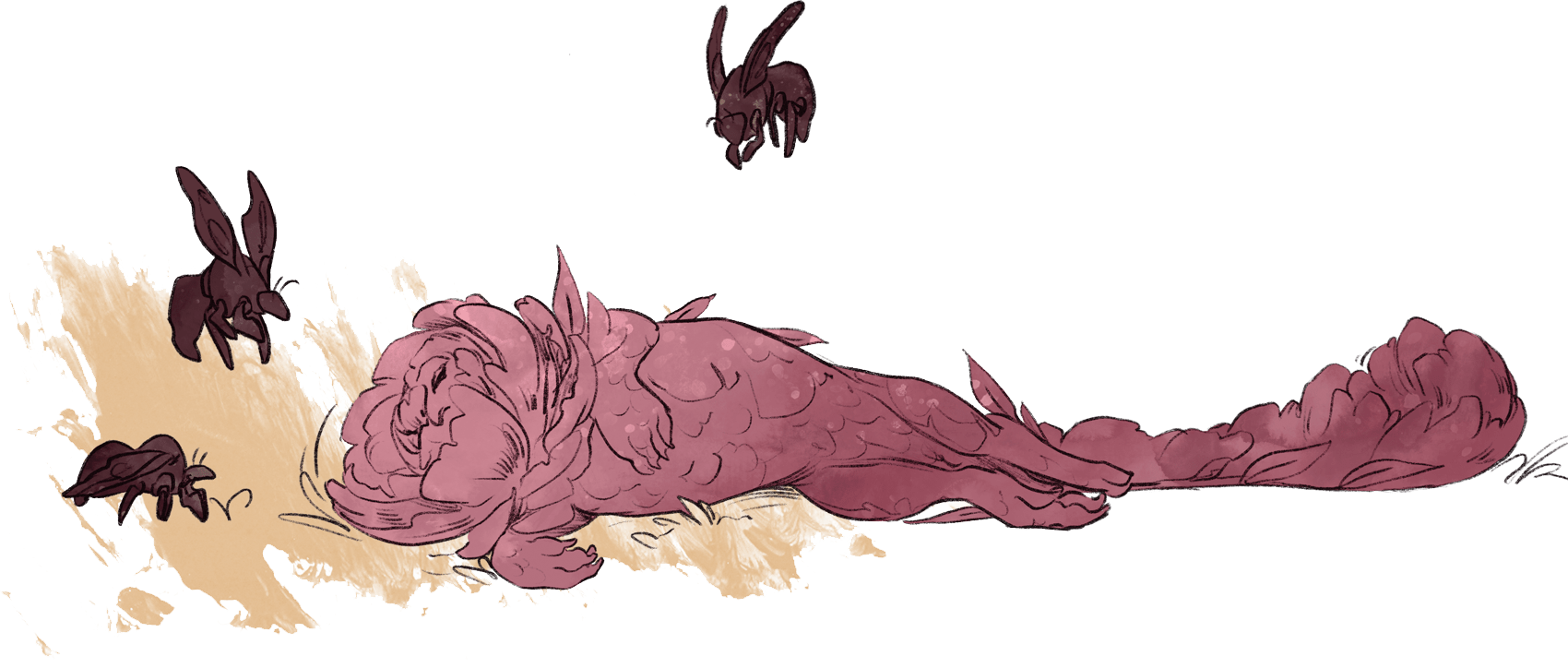
Once piqued, my curiosity is nigh insatiable, so I went back to see what else I could learn. I saw the dragon lying among the flowers surrounded by vespons. They were feeding on the nectar of the dragon’s flowers and the flowers around its den.
The dragon rolled over a few times, and that was when I realized the vespons were grooming it. Remarkable! I didn’t want to overstay my welcome, so I only watched them for a moment.
Personality Traits
Peony Dragon Personality Traits
| d8 | Trait |
|---|---|
| 1 | I spend more time frolicking in tall peonies than hunting. |
| 2 | I have a terrible sense of direction and often get lost in the peonies around my den. |
| 3 | I’m clumsy and hit other dragons and break peony flowers with my tail by accident. |
| 4 | I love the sun, and I never close the petals around my face. |
| 5 | My roar is more like a meow, but I have the sharpest claws in my blooming. |
| 6 | I pick fights with intruders twice my size—and win. |
| 7 | I am the quietest prowler in my blooming, and not even my own kin can hear me coming. |
| 8 | I never have the patience to stalk my prey and always pounce too soon. |
Motivations
Peony Dragon Motivations
| d6 | Motivation |
|---|---|
| 1 | My dream is to leave and start my own blooming. |
| 2 | I’d do anything to ensure the safety of my den and wyrmlings. |
| 3 | I won’t stop expanding my lair until the whole grassland is covered in peonies. |
| 4 | I can’t let that blooming of larkspur dragons take over my meadow. |
| 5 | I want be friends with everyone who comes near my den. |
| 6 | I want to make the finest home for the vespons who have always looked out for me. |
Adventure Hooks
Here are ways to include peony dragons in your game.
| d4 | Adventure Hook |
|---|---|
| 1 | A local farmer awoke to find a thicket of tall peonies in their pasture. They can’t allow their livestock to graze there, and they need help dealing with the dragons that have moved in. |
| 2 | A malady has struck a nearby settlement, and peony flowers are a vital ingredient for the cure. The sickness is spreading fast, and the only source of flowers is a meadow occupied by peony dragons. |
| 3 | A villager has heard roars and snarls coming from a field of peonies and fears the flowers may hide a monster. In reality, several adult peony dragons are trying to locate their wyrmling, who is lost in their own peonies. |
| 4 | Larkspur dragons and peony dragons have been fighting over the same stretch of land, wreaking havoc on the local ecosystem. |
Caption
Fig. 2 A swarm of vespons grooms a peony dragon.
Amina
Peony wyrmlings are adorable! I saw several adult dragons this time, all taking care of various young dragons.
They didn’t seem to have defined roles; all the adults groomed and fed their charges—I even saw one dunking a wyrmling in a shallow pool of water to clean it!
I’m so glad my first impression of these dragons was wrong. After my close call with the aconite dragon, it was nice to see some gentle dragons. I’ll leave them alone for now. I am lucky to have seen as much of them as I did.
A Peony Dragon’s Lair
Peony dragons make their lairs in earthen craters that they dig themselves, surrounded by tall peony flowers. They spend most of their time in the den caring for their blooming or hunting for food either in the field of peony flowers or nearby forests. A lair might be home to half a dozen adult peony dragons and their young.
Lair Actions
While fighting inside its lair, a peony dragon can make tactical use of its home environment to take lair actions. On initiative count 20 (losing initiative ties), the dragon takes a lair action to cause one of the following effects; the dragon can’t use the same effect two rounds in a row.
- Tall peony flowers grow rapidly, hiding the dragon from sight. To discern the dragon’s location, a creature can use its action to find it and must succeed on a DC 16 Wisdom (Perception) check. While it remains hidden in this way, the dragon has half cover. These effects last until the dragon attacks or uses another lair action.
- The dragon kicks up a cloud of dirt from its den. One creature of its choice within 5 feet of it must succeed on a DC 13 Dexterity saving throw or be blinded until the start of the dragon’s next turn.
- Peony flowers twist and writhe on the ground, tripping enemies of the dragon. Each creature in a line 30 feet long and 5 feet wide originating from the dragon must succeed on a DC 14 Strength saving throw or be knocked prone.
Regional Effects
Caption
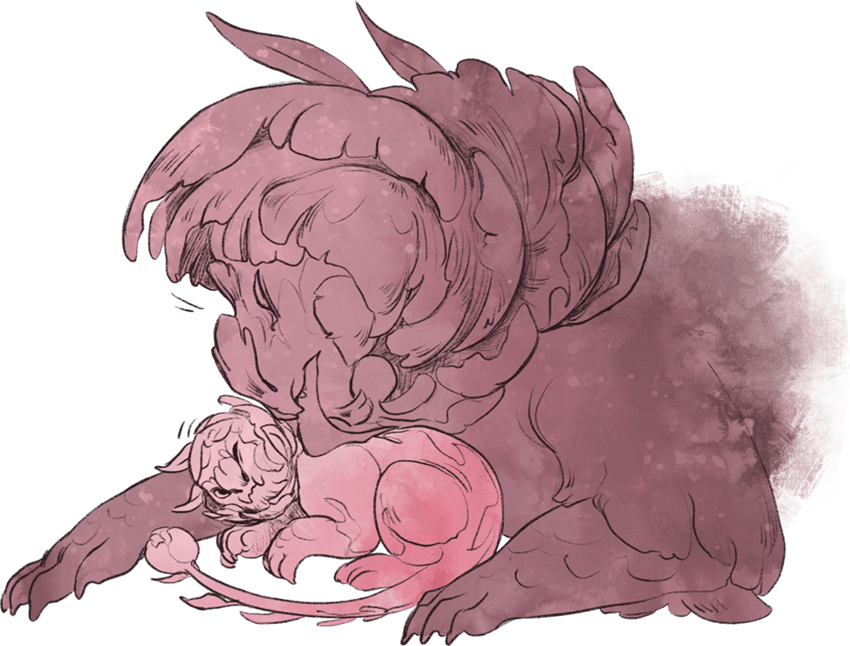
Fig. 3 A peony dragon caring for its wyrmling.
The area in the vicinity of a peony dragon’s lair is influenced by the dragon’s presence, which creates one or more of the following effects:
- Unnaturally tall peonies bloom 10 feet high within 30 feet of the lair and gradually expand to overtake the surrounding grasslands.
- Patches of grassland where the tall peonies are growing are difficult terrain.
- The population of vespons in the area is much higher than normal. There is a notable absence of other pollinators.
If all the dragons sharing the lair die or leave, these effects fade over the course of 2d6 months.