Loot Tavern
Heliana, Toast Burner
Cooking can be delicious, nutritious, and, when you introduce magical aboleth tentacles, a little bit suspicious… They never seem to stop twitching. I love a hearty owlboar steak as much as the next person, but cooking with magical components is a whole different kettle of broodlings. Magical meals are more than just food. If you can get them right, they’re like slow-acting potions: once you digest them, things get weird!
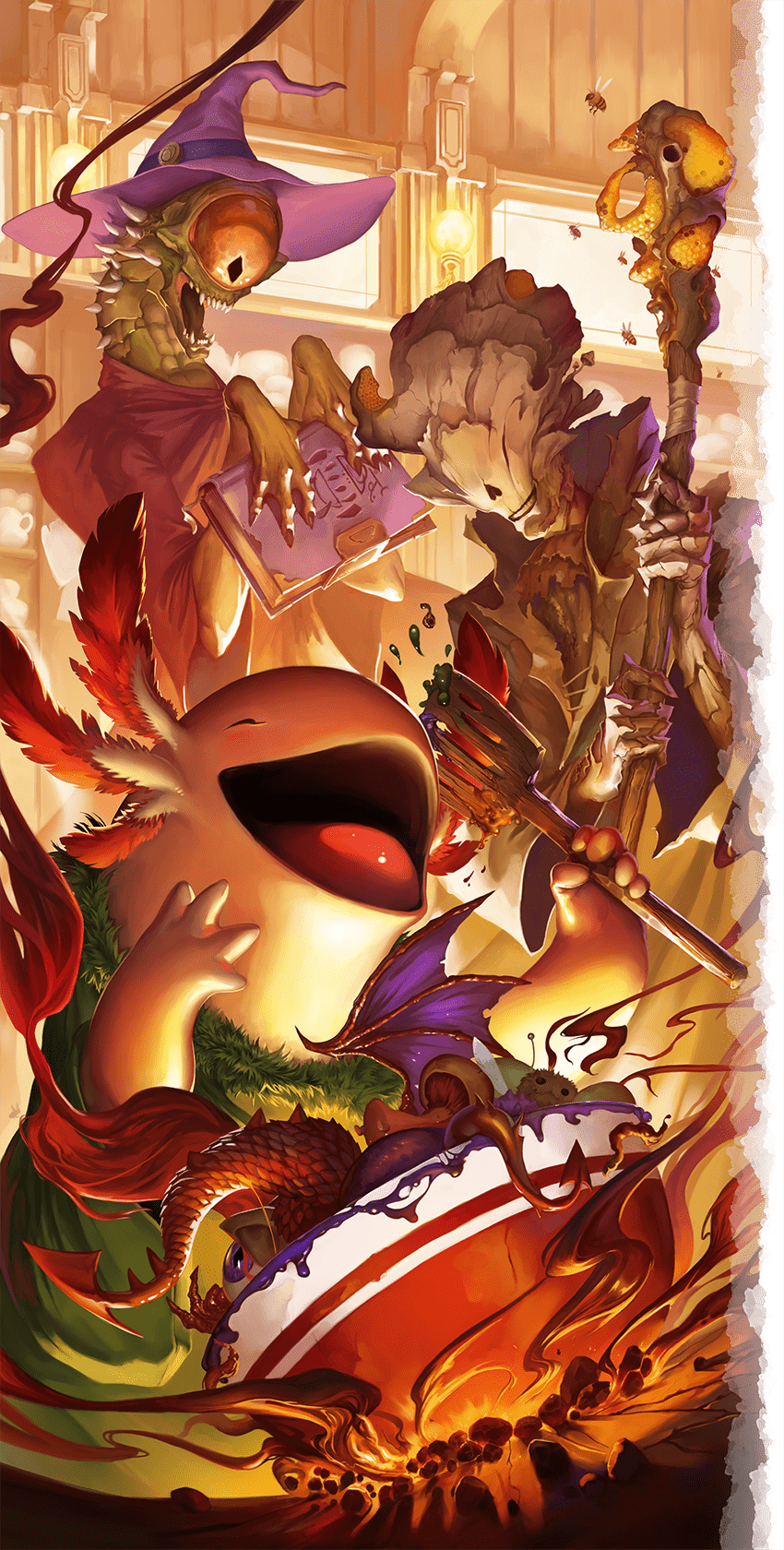
Cooking is a subcategory of crafting that allows players to use their downtime to prepare for the conflict ahead in a whole new way. This section explores cooking magical food. It first describes the rules for cooking food, then details the 22 staple recipes and 10 boss-monster-specific recipes, before finishing by diving into the myriad different effects of edible monster components.
Magical Cuisine
Like crafting, cooking uses harvested monster components to impart magical effects on food, known as magical meals. When consumed and digested, magical meals have long-lasting magical effects. These effects vary based on two factors: the type of component (for example, eye vs blood), and the creature type that the component came from (an aberration’s eye has different properties to a dragon’s eye). Different recipes call for different types of ingredients; a black pudding requires just blood, while offal stew needs a liver, heart, and brain. The more ingredients a magical meal calls for, the more effects it imparts simultaneously, and the harder it is to cook.
Apply Heat, Don’t Burn
A magical meal takes 1 hour to cook and 10 minutes to consume and digest. A magical meal must be fully consumed within 1 hour of being cooked; if it is eaten after this hour, it imparts no magical effects. The effects last 8 hours, or until dispelled by Dispel Magic or similar magic. A creature that eats a magical meal while already under the effects of another loses the effects of the previous meal at the end of the 10 minutes required to consume the new meal.
Dispelling Magical Meals
For the purposes of the Dispel Magic spell, all of a meal’s effects count as one single spell of a level based on the meal’s rarity: uncommon, 2nd-level; rare, 4th-level; very rare, 6th-level; legendary, 8th level.
Portions. A magical meal is typically large enough to feed one Large creature or up to four Medium or smaller creatures. If you have more than four players at your table, consider allowing a single meal to have enough portions to feed the entire party; it can be more fun that way.
Checks. Making a magical meal requires five things:
- A recipe
- Monster components
- Essence
- Cook’s utensils
- A source of heat
A creature with all these in their possession can spend 1 hour cooking. At the conclusion of the hour, the creature makes a Constitution (cook’s utensils) check against the DC of the recipe (see Ingredients and Recipe DC table). Depending on the difference between the DC and the result of the check, a magical meal can have quirks.
Helping Hands. Too many cooks spoil the broth, but a decent sous chef can pay dividends. For this reason, in place of using the Help action to grant advantage (a mechanic avoided in harvesting and crafting), one creature can help with the meal if it spends the entire hour helping the cook. If the creature has proficiency with cook’s utensils, it adds its proficiency bonus to the result of the Constitution (cook’s utensils) check. If it doesn’t have this proficiency, it adds half of its proficiency bonus to the result of the check instead.
Recipes
This book presents two types of recipes: staple ones which can be cooked with monster components of any type, and ‘boss recipes’ which require components specific to the boss monsters in the hunts in this book. It is up to the GM whether player characters know these recipes, or must discover them. You could introduce recipes in ancient tomes, give them to a character whose grandfather was a famous chef, or make them purchasable from magical restaurants or culinary schools. Discuss this with your table before you introduce this ruleset.
Potency and Essence. Essence is required for every magical meal; it is the factor that decides how powerful the meal’s effects will be. As with crafting, essence dictates the rarity of the magical meal, from uncommon to legendary. Rarity’s effect on magical meals is described in the Edible Component Effects section.
Edible Components. The components in the harvesting chapter marked with a superscript ‘E’ (E) are edible—they all have magical effects if properly prepared. There are 10 types of edible components: blood, bone, brain, egg, eye, fat, flesh, heart, liver, and spice. Not all creature types supply every type of edible component. For a breakdown of each component type’s effects, see Edible Component Effects section. Any unlisted nonmagical ingredients are supplied from a player character’s normal rations, and don’t require detailing.
Difficulty. The more ingredients a recipe has, the more magical effects it imparts to those who consume it, and the higher the DC is to craft it. There are four tiers of difficulty:
Ingredients and Recipe DC
| Recipe Tier | Number of Ingredients | DC |
|---|---|---|
| Novice | 1 | 12 |
| Journeyman | 2 | 16 |
| Expert | 3 | 20 |
| Artisan | 4 | 24 |
Staple Recipes
Novice Recipes (DC 12)
| Recipe | Ingredient |
|---|---|
| Keyebob | Eye |
| Tempura | Fat |
| Steak | Flesh |
| Blood curd | Blood |
| Bone broth | Bone |
| Egg dumpling | Egg |
| Hearty stew | Heart |
| Liverwurst | Liver |
Journeyman Recipes (DC 16)
| Recipe | Ingredients | |
|---|---|---|
| Meaty masala | Flesh | Spice |
| Tofeye apple | Bone | Eye |
| Dwarven scotch | Egg | Flesh |
| Gobbois gras | Fat | Liver |
| Devilled egg | Egg | Spice |
| Black pudding | Blood | Fat |
| Bloody gazpacho* | Blood | Spice |
| Carrion delight | Bone | Fat |
Expert Recipes (DC 20)
| Recipe | Ingredients | ||
|---|---|---|---|
| Chronomancer’s slow cooked joint | Bone | Fat | Flesh |
| Offally good stew | Brain | Heart | Liver |
| Draconic delight | Egg | Flesh | Spice |
| Brain barbacoa | Bone | Brain | Eye |
Artisan Recipes (DC 25)
| Recipe | Ingredients | |||
|---|---|---|---|---|
| Scarlet eye flan | Blood | Brain | Eye | Fat |
| Beastial bourguignon | Flesh | Heart | Liver | Spice |
Omitting Ingredients. A cook can replace a magical ingredient with a nonmagical one. If they choose to do so, they don’t get the associated magical effect of the nonmagical component, but can still attempt to craft the meal. For example, if a creature wants to make a scarlet eye flan, but has no magical blood, they can use the blood of any creature (provided it hasn’t spoiled) to complete the recipe. The DC for the recipe doesn’t change, and the magical meal only imparts the effects of the three magical components used: brain, eye, and fat.
Boss Monster Recipes
Boss Monster recipes confer unique effects in addition to the effects of the components that make up the recipes. For example, aboleth ramen gives you the effect of aboleth flesh (bonus psychic damage) and the additional effect granted from consuming the boss dish (increased reach).
Boss Monster Recipes
| Recipe | DC | Boss Ingredients | Other Ingredients | ||
|---|---|---|---|---|---|
| Aboleth Ramen | 12 | Flesh: Aberration (broodmother) tentacle | |||
| Jello Shot | 16 | Blood: Phial of ooze (polyhedrooze) mucus | Fat | ||
| Mushroom Mélange | 16 | Spice: Pouch of plant (hyphan) spores | Fat | ||
| Rakoyaki | 16 | Brain: Fiend (pygmy) brain | Blood | ||
| Skrapyard Sosig | 16 | Flesh: Construct (koboldzilla) tubing | Egg | ||
| Tongue Twister Tart | 16 | Flesh: Monstrosity (tavern mimic) tongue | Brain | ||
| Magnetite Curry | 20 | Flesh: Dragon (magnetite) flesh | Liver | Spice | |
| Dumpleyengs | 20 | Eye: Aberration (dreamholder) subeye | Blood | Heart | |
| Suneater Steak and Eggs | 20 | Flesh: Fey (suneater) flesh | Blood | Egg | |
| Tar-rasque Marrow Broth | 24 | Bone: Elemental (tar-rasque) marrow | Heart | Liver | Spice |
For the duration of the magical meal’s effects, a creature that consumes and digests the meal gains the following additional effect, with a value shown in the Boss Monster Effect Scaling table:
Caption
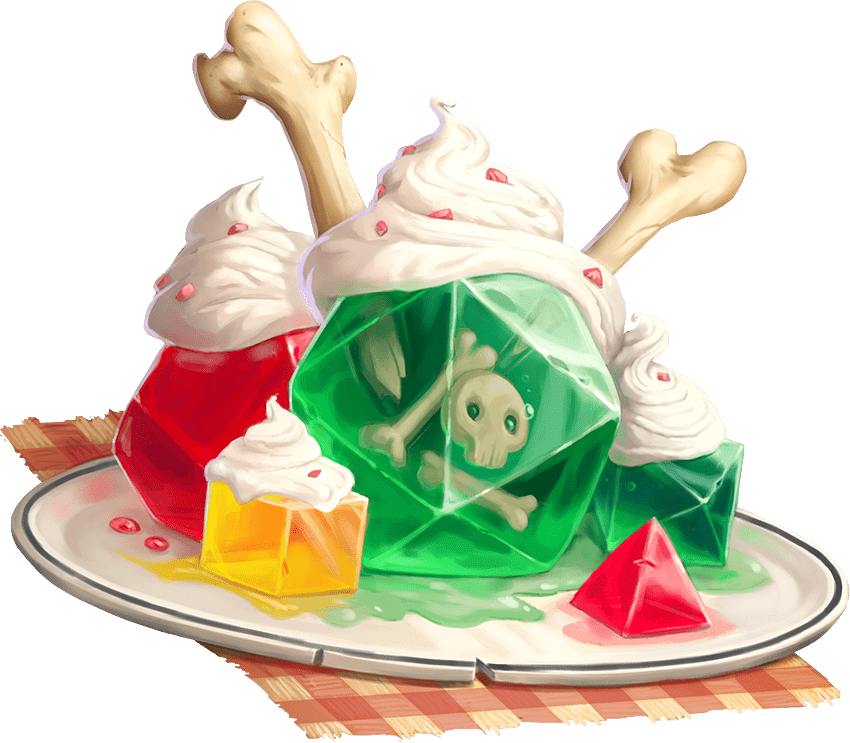
Jello Shot
Aboleth Ramen. When you make a melee weapon attack on your turn, your reach with it is greater than normal. This distance increases with rarity.
Jello Shot. Immediately after you take damage, you gain resistance to that damage type for the next minute. The number of resistances you can have from this effect simultaneously increases with rarity. If you are at your maximum number of resistances, you can’t gain more.
Caption
Mushroom Mélange
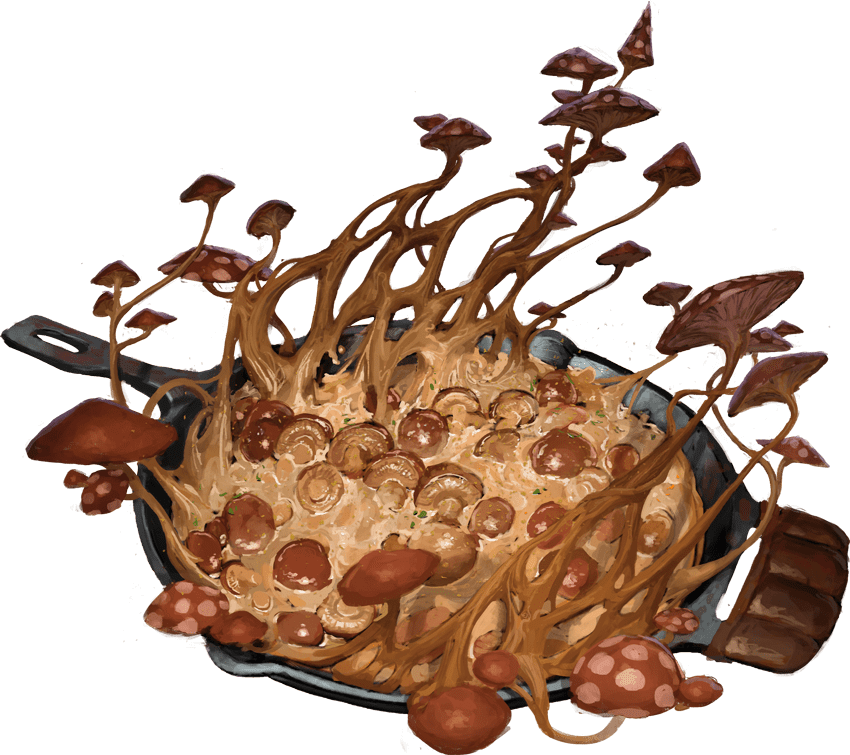
Mushroom Mélange. You know the direction and distance of all corpses within a certain radius of you. This radius increases with rarity. The effect can penetrate most barriers, but it is blocked by 1 foot of stone, 1 inch of common metal, a thin sheet of lead, or 3 feet of wood or dirt.
Caption
Rakoyaki
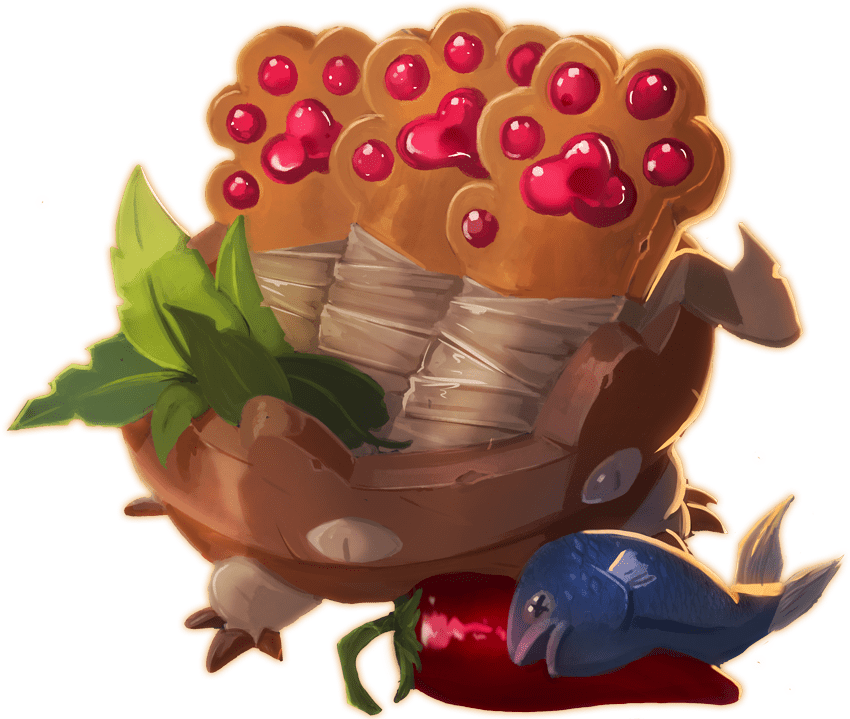
Rakoyaki. You can’t be affected or detected by spells of a certain level or lower unless you wish to be. The level of spells affected increases with rarity.
Caption
Skrapyard Sosig
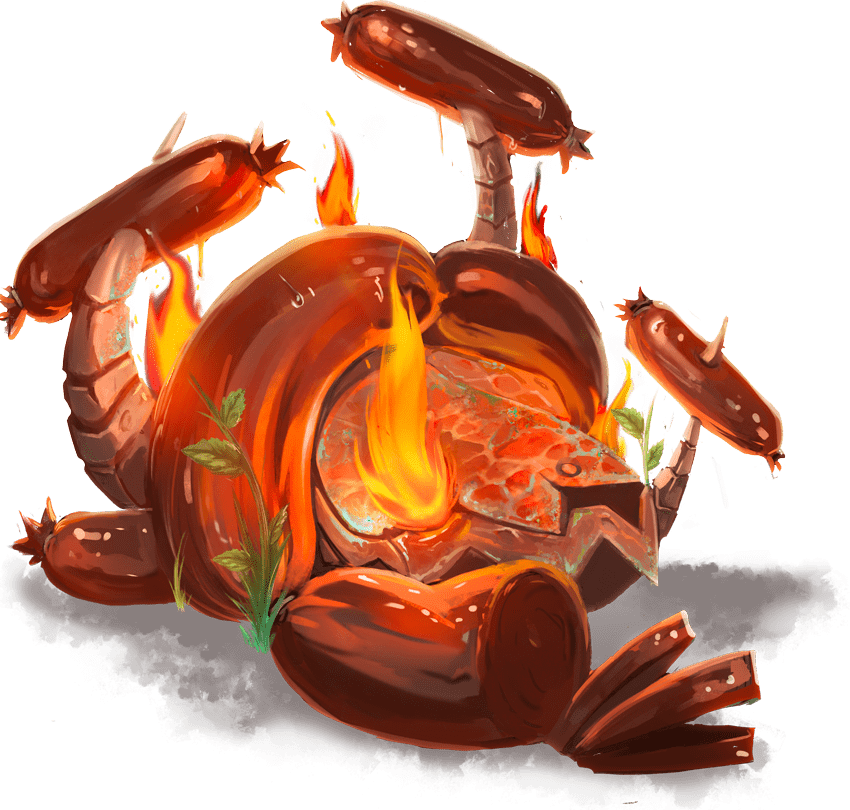
Skrapyard Sosig. Your power of self belief is so strong that, at the start of each of your turns, you gain a number of temporary hit points equal to your Charisma modifier (minimum 1). The number of temporary hit points gained increases with rarity.
Caption
Tongue Twister Tart
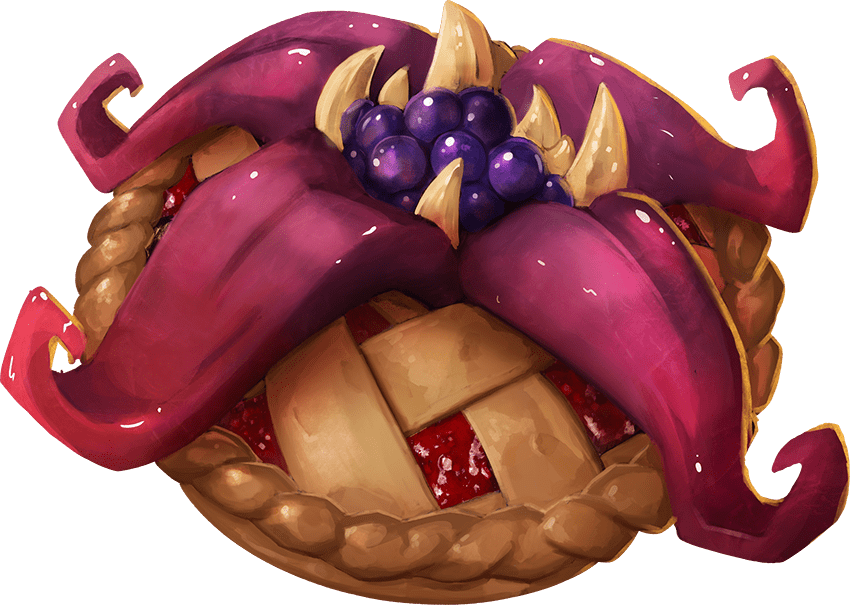
Tongue Twister Tart. You can use an action to transform into a piece of furniture equal to your size or back to your normal form. While transformed, you have a walking speed of 5 feet, can’t take any action other than the Dash action or the action to change back into your normal form, and otherwise retain your game statistics. A creature can use its action to make an Intelligence (Investigation) check to inspect you, realising you are a transformed creature on a success. The DC for this check increases with rarity.
Caption
Magnetite Curry
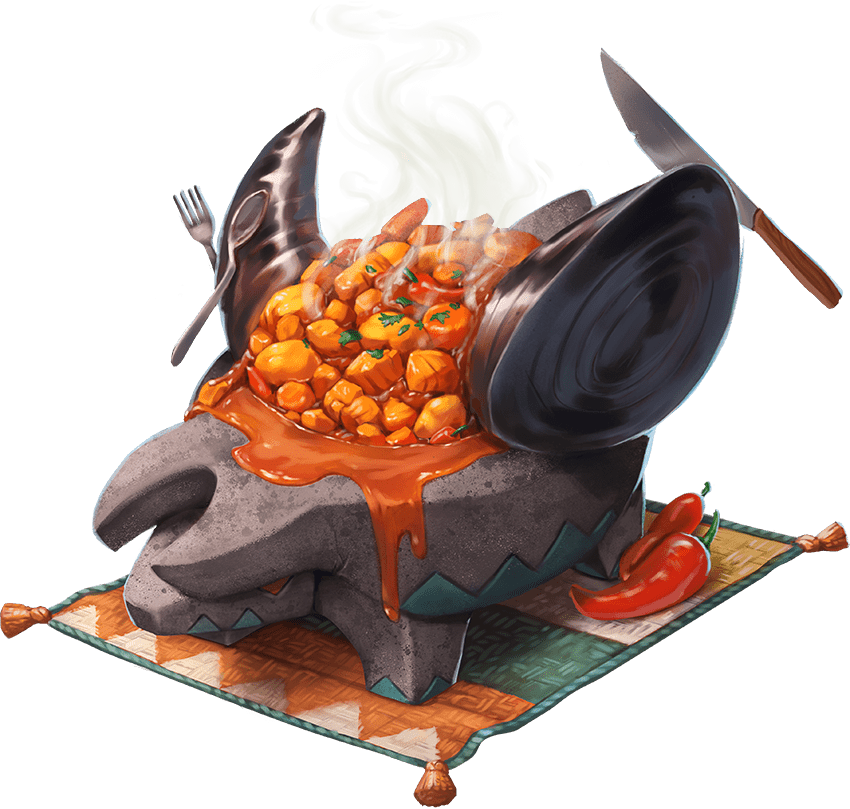
Magnetite Curry. When you are hit by a nonmagical, ferrous weapon, the damage you take is reduced. The value of the reduction increases with rarity. This damage reduction occurs before resistance is calculated.
Caption
Dumpleyengs

Dumpleyengs. You can cast the Daydream spell once, without requiring any components, and regain the ability to cast it this way after 1 hour has passed. The DC of the saving throw increases with rarity.
Caption
Suneater Steak and Eggs
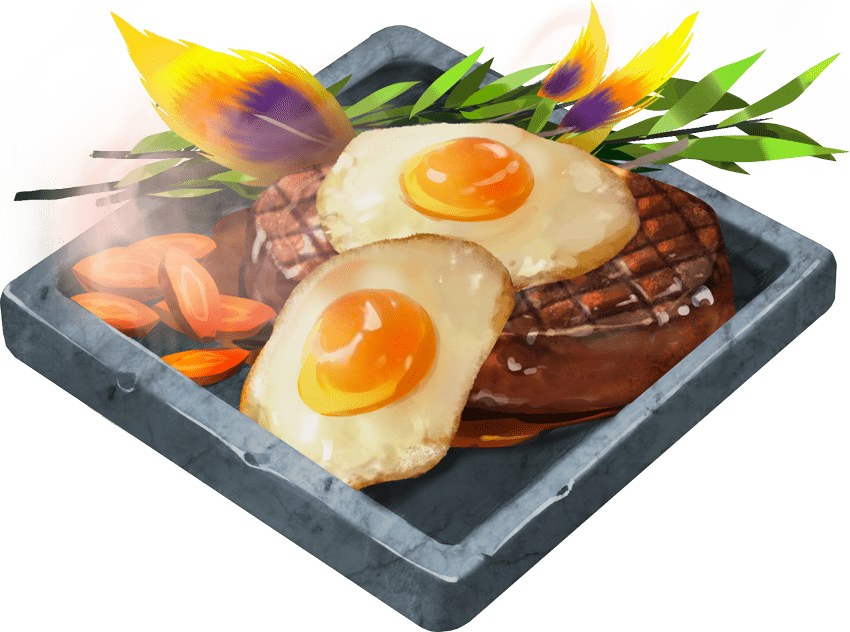
Suneater Steak and Eggs. You regain a number of hit points at the end of each hour you spend in sunlight. The number of hit points increases with rarity.
Caption
Tar-rasque Marrow Broth
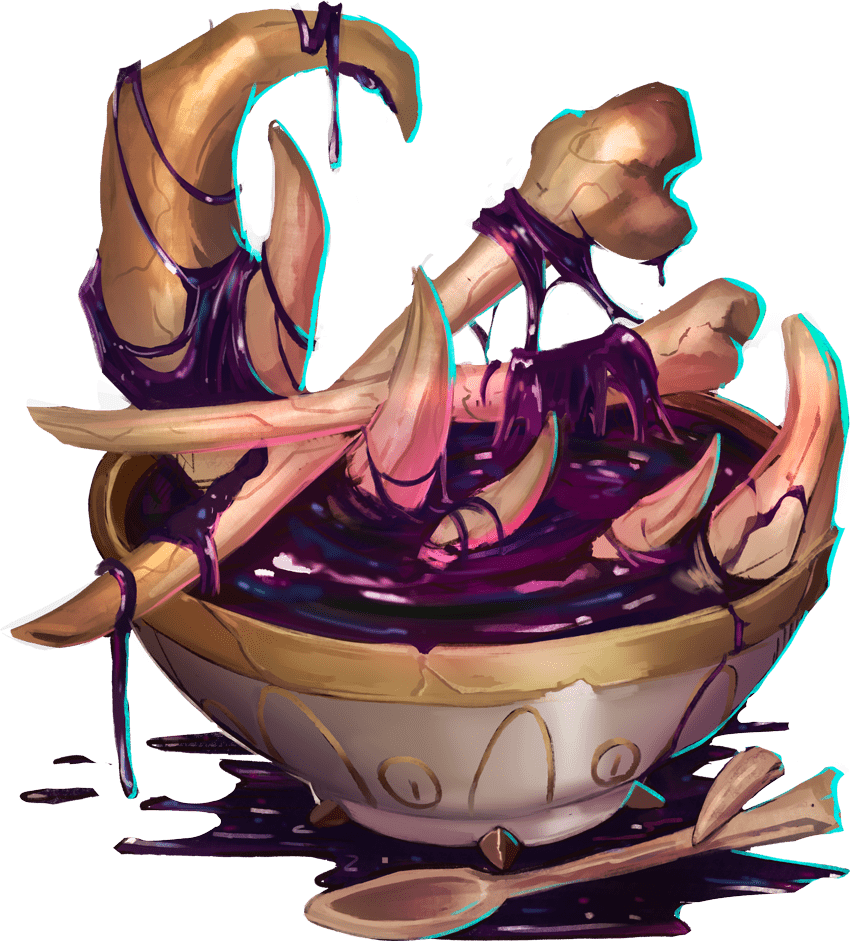
Tar-rasque Marrow Broth. If you take damage from a spell or other magical effect, you become empowered. The next attack you make within the next minute that hits a target deals additional necrotic damage. This damage increases with rarity.
Optional Rule: Extra Recipes. You can choose to make these boss monster recipes available as staple recipes, as well. If you do so, the boss monster ingredient can be replaced with another ingredient of the same type (for example, a different flesh instead of the broodmother tentacle). If this replacement occurs, the additional effect of the dish (the one based on the boss monster ingredient) is not conferred to a creature that eats the meal.
Boss Monster Effect Scaling
| Rarity | Aboleth Ramen | Jello Shot | Mushroom Mélange | Rakoyaki | Skrapyard Sosig | Tongue Twister Tart | Magnetite Curry | Dumpleyengs | Suneater Steak & Eggs | Tar‑rasque Marrow Broth |
|---|---|---|---|---|---|---|---|---|---|---|
| Uncommon | 5 ft. | 1 | 60 ft. | Cantrip | Cha mod* | DC 13 | 1d6 | DC 13 | 1d6 | 1d4 |
| Rare | 5 ft. | 1 | 240 ft. | 1st level | Cha mod* + 2 | DC 15 | 1d8 | DC 15 | 2d6 | 2d4 |
| Very rare | 10 ft. | 2 | 960 ft. | 2nd level | Cha mod* + 4 | DC 16 | 1d10 | DC 16 | 3d6 | 3d4 |
| Legendary | 10 ft. | 2 | 1 mile | 3rd level | Cha mod* + 6 | DC 17 | 1d12 | DC 17 | 4d6 | 4d4 |
Edible Component Effects
This section lists the ten types of edible components alphabetically, breaking down the effects by creature type. If a creature type isn’t listed for an edible component, that component isn’t magical for that creature. For example, humanoid flesh has no magical effects, and thus isn’t listed as a harvestable component, but could still be acquired as a non-magical foodstuff.
The effects are worded as addressing the creature that has consumed and digested the magical meal. If an effect puts the creature ‘under the effect of a spell’, this spell does not require concentration, but can be dispelled. The Edible Monster Component Summary table describes the types of edible magical components available from each creature type.
Edible Monster Component Summary
| Component | Aberration | Beast | Celestial | Construct | Dragon | Elemental | Fey | Fiend | Giant | Humanoid | Monstrosity | Ooze | Plant | Undead |
|---|---|---|---|---|---|---|---|---|---|---|---|---|---|---|
| Blood | ✓ | ✓ | ✓ | ✓ | ✓ | – | ✓ | ✓ | ✓ | ✓ | ✓ | ✓ | ✓ | ✓ |
| Bone | ✓ | ✓ | ✓ | ✓ | ✓ | ✓ | ✓ | ✓ | ✓ | ✓ | ✓ | – | ✓ | ✓ |
| Brain | ✓ | – | ✓ | ✓ | – | – | ✓ | ✓ | – | ✓ | – | – | – | – |
| Egg | ✓ | ✓ | – | – | ✓ | – | ✓ | – | – | ✓ | ✓ | – | – | – |
| Eye | ✓ | ✓ | ✓ | – | ✓ | ✓ | ✓ | ✓ | – | – | ✓ | – | – | ✓ |
| Fat | ✓ | ✓ | ✓ | ✓ | ✓ | – | ✓ | ✓ | ✓ | – | ✓ | ✓ | ✓ | ✓ |
| Flesh | ✓ | ✓ | ✓ | ✓ | ✓ | – | ✓ | ✓ | ✓ | – | ✓ | – | ✓ | ✓ |
| Heart | ✓ | ✓ | ✓ | ✓ | ✓ | – | ✓ | ✓ | ✓ | ✓ | ✓ | – | ✓ | ✓ |
| Liver | ✓ | ✓ | ✓ | ✓ | ✓ | – | ✓ | ✓ | ✓ | ✓ | ✓ | ✓ | ✓ | – |
| Spice | – | – | ✓ | – | – | ✓ | ✓ | ✓ | – | – | – | – | ✓ | ✓ |
Blood
Blood gives its ingester a taste for certain creature types. For the duration, the first time each turn that you hit a creature whose type matches the creature type of the blood you consumed, the attack deals bonus damage to the target. The damage is of the same type as the attack and increases with rarity: uncommon, 1d4; rare, 1d6; very rare, 1d8; legendary, 1d10.
Bone
The vitality stored within bones reinforces a creature’s resilience to certain types of effects. Except for celestial and undead bones, the effects don’t change with rarity. For the duration, you:
Aberration. Have advantage on saving throws against the stunned condition.
Beast. Have advantage on saving throws against the blinded condition.
Celestial. Gain temporary hit points at the start of each minute, which increases with rarity.
Construct. Have advantage on saving throws against gaining levels of exhaustion.
Dragon. Have advantage on saving throws against the frightened condition.
Elemental. Have advantage on saving throws against extreme weather and temperature.
Fey. Have advantage on saving throws against the charmed condition.
Fiend. Have advantage on saving throws against the poisoned condition.
Giant. Have advantage on saving throws against the restrained condition.
Humanoid. Have advantage on saving throws against diseases.
Monstrosity. Have advantage on saving throws against the paralyzed condition.
Plant. Can’t be put to sleep by magic.
Undead. Have advantage on saving throws against diseases. Additionally, you immediately regain a number of hit points, which increases with rarity.
Bone Effect Scaling
| Rarity | Celestial | Undead |
|---|---|---|
| Uncommon | 1d6 | 1d4 + 1 |
| Rare | 2d6 | 2d4 + 2 |
| Very rare | 3d6 | 3d4 + 3 |
| Legendary | 4d6 | 4d4 + 4 |
Brain
Digesting brains imparts enhanced mental faculties. Of the edible brains, aberrations and humanoids have particularly unique abilities. For the duration, you:
Aberration. Can communicate telepathically with creatures within a certain radius of you, which increases with rarity. You must be able to see the creature and share a language to communicate in this way. In addition, higher rarities grant you advantage on Insight checks (very rare and legendary) and put you under the effects of the Detect Thoughts spell (legendary).
Celestial. Gain a bonus to Charisma checks, which increases with rarity.
Construct. Gain a bonus to Intelligence checks, which increases with rarity.
Fey. Gain a bonus to Wisdom checks, which increases with rarity.
Fiend. Gain a bonus to Charisma checks, which increases with rarity.
Humanoid. Gain a bonus to ability checks using a single randomly determined skill. The bonus increases with rarity.
Brain Effect Scaling
| Rarity | Aberration | Check Bonus |
|---|---|---|
| Uncommon | 30 ft. | +1 |
| Rare | 90 ft. | +2 |
| Very rare | 300 ft. | +3 |
| Legendary | 900 ft. | +4 |
Egg
Eggs contain the primed biomantic material for creatures of the component’s type. When you ingest a meal that contains egg, your body undergoes interesting morphological changes that last for the effect’s duration.
Aberration. You grow a tentacle that can be used to hold non-armour items, or to grapple a creature, but not to make other attacks. You use the tentacle’s Strength modifier instead of your own when grappling with it. The Strength modifier of the tentacle increases with rarity.
Beast. Your morphology changes to adapt to the current environment. You have advantage on saving throws against environmental effects of the GM’s discretion. For example, if you are in a cold biome, you might grow fur and have advantage on saving throws against the effects of the cold.
Dragon. You grow a fanged maw, a natural weapon which you can use to make unarmed strikes. If you hit with it, you deal piercing damage equal to a value that increases with rarity + your Strength modifier, instead of the bludgeoning damage normal for an unarmed strike.
Fey. You shimmer while standing still, becoming hard to see. You are under the effects of the Chameleon Skin spell.
Humanoid. You gain a swimming speed or flying speed, which increases with rarity.
Monstrosity. You grow scales that grant you a new way to calculate your AC. The calculation increases with rarity. You can use the calculation to determine your AC if the armour you wear would leave you with a lower AC.
Egg Effect Scaling
| Rarity | Aberration | Dragon | Humanoid | Monstrosity |
|---|---|---|---|---|
| Uncommon | +0 | 1d6 | 30 ft. swim | 12 + Dex mod |
| Rare | +2 | 1d8 | 45 ft. swim | 13 + Dex mod |
| Very rare | +4 | 1d10 | 15 ft. fly | 14 + Dex mod |
| Legendary | +6 | 1d12 | 30 ft. fly | 15 + Dex mod |
Eye
Eyes are strong receptacles of divination magic, and they tend to impart effects that help with perception and detection. For the duration, you:
Aberration. Are under the effects of the Detect Magic spell. The radius of the sense increases with rarity.
Beast. Gain a bonus to your Perception checks. The bonus increases with rarity.
Celestial. Are under the effects of the Detect Evil and Good spell. The radius of the sense increases with rarity.
Dragon. Gain a bonus to your Intimidation checks. The bonus increases with rarity.
Elemental. Know the location of any elemental within a radius around you that isn’t protected from divination magic. The radius increases with rarity.
Fey. Are under the effects of the See Invisibility spell, out to a certain range. The range of the vision increases with rarity.
Fiend. Can see normally in dim light and darkness, both magical and nonmagical. The radius of the vision increases with rarity.
Monstrosity. Gain darkvision or, if you already have darkvision, its range is increased. The range of the vision increases with rarity.
Undead. Know the location of any undead within a radius around you that isn’t protected from divination magic. The radius increases with rarity.
Eye Effect Scaling
| Rarity | Aberration | Beast | Celestial | Dragon | Elemental | Fey | Fiend | Monstrosity | Undead |
|---|---|---|---|---|---|---|---|---|---|
| Uncommon | 10 ft. | +1 | 10 ft. | +1 | 10 ft. | 10 ft. | 10 ft. | 30 ft. or +15 ft. | 10 ft. |
| Rare | 20 ft. | +2 | 20 ft. | +2 | 20 ft. | 20 ft. | 20 ft. | 60 ft. or +30 ft. | 20 ft. |
| Very rare | 60 ft. | +3 | 60 ft. | +3 | 60 ft. | 60 ft. | 60 ft. | 90 ft. or +45 ft. | 60 ft. |
| Legendary | 180 ft. | +4 | 180 ft. | +4 | 180 ft. | 180 ft. | 180 ft. | 120 ft. or +60 ft. | 180 ft. |
Fat
Fat inures creatures to particular types of damage, decreasing the trauma caused when a creature takes damage of that type. Whenever you take damage of the type associated with the creature type whose fat you ingested, roll a die and subtract the result from that damage. The die is determined by the rarity: uncommon, 1d4; rare, 1d6; very rare, 1d8; legendary, 1d10. This damage reduction occurs before resistance is calculated.
Aberration. Psychic.
Beast. Cold.
Celestial. Radiant.
Construct. Lightning.
Dragon. Meta; the same as the damage type of the dragon’s Breath Weapon. If a dragon possesses Breath Weapons that deal multiple damage types, the damage type is randomly determined from among the available options. If it doesn’t have a breath weapon, its fat has no effect.
Fey. Poison.
Fiend. Fire.
Giant. Meta; the same as the damage type with which the giant is associated (GM’s discretion). If a giant is associated with more than one damage type, the damage type is randomly determined from among the available options. If a giant possesses no additional damage type, its fat has no effect.
Monstrosity. Thunder.
Ooze. Acid.
Plant. Poison.
Undead. Necrotic.
Flesh
Flesh fortifies the body with power. The first attack you make each turn that hits deals bonus damage of a type associated with the creature type of the flesh you ingested. The damage increases with rarity: uncommon, 1; rare, 2; very rare, 3; legendary, 4.
Aberration. Psychic.
Beast. Cold.
Celestial. Radiant.
Construct. Lightning.
Dragon. Meta; the same as the damage type of the dragon’s Breath Weapon. If a dragon possesses Breath Weapons that deal multiple damage types, the damage type is randomly determined from among the available options. If it doesn’t have a breath weapon, its flesh has no effect.
Fey. Poison.
Fiend. Fire.
Giant. Meta; the same as the damage type with which the giant is associated (GM’s discretion). If a giant is associated with more than one damage type, the damage type is randomly determined from among the available options. If a giant possesses no additional damage type, its flesh has no effect.
Monstrosity. Thunder.
Plant. Acid.
Undead. Necrotic.
Heart
Eating the magical heart of a creature lets you detect the presence of other hearts of that creature type. You know the direction (but not distance) of living (or, in the case of undead, unliving) hearts belonging to that creature type within a certain radius, which increases with rarity. This effect can penetrate most barriers, but it is blocked by 1 foot of stone, 1 inch of common metal, a thin sheet of lead, or 3 feet of wood or dirt.
Heart Effect Scaling
| Rarity | Detection Radius |
|---|---|
| Uncommon | 60 ft. |
| Rare | 240 ft. |
| Very rare | 960 ft. |
| Legendary | 1 mile |
Liver
Ingesting the magically-preserved liver of a creature repulses creatures of that creature type. When a creature of the same type as the liver you ingested hits you with a melee attack, that creature takes necrotic damage. This necrotic damage increases with rarity: uncommon, 1d4; rare, 1d6; very rare, 1d8; legendary, 1d10. Once a creature takes this damage, the effect can’t occur again until the start of your next turn.
Spice
Spice incorporates everything from celestial and fiend dust to the primordial remains of elementals, ethereal ichor, to pixie dust, and the pollen and spores of plants. The effects of spice are disparate, and last for the duration.
Celestial. At uncommon rarity, you are continuously under the effects of the Feather Fall spell. At rare and higher rarities, you also gain a flying speed, which increases with rarity.
Fey. You are under the effects of the Detect Evil and Good spell. At higher rarities, you are also under the effects of the Detect Thoughts spell
Fiend. You gain temporary hit points at the start of each minute. The number of temporary hit points increases with rarity.
Elemental. You can cast a random elemental cantrip at will. Roll on the Random Cantrip table to determine which cantrip. The caster level at which the cantrip is cast increases with rarity.
Random Elemental Cantrip
Plant. You are under the effects of the Speak with Plants spell.
Undead. Your maximum and current hit points increase. This value increases with rarity.
Spice Effect Scaling
| Rarity | Celestial | Elemental | Fey | Fiend | Undead |
|---|---|---|---|---|---|
| Uncommon | Feather Fall | Base level | Detect Evil and Good | 2d4 | 2d4 |
| Rare | Fly 15 ft. | 5th-level | Detect Thoughts (save DC 15) | 4d4 | 4d4 |
| Very rare | Fly 30 ft. | 11th-level | Detect Thoughts (save DC 16) | 6d4 | 6d4 |
| Legendary | Fly 60 ft. | 17th-level | Detect Thoughts (save DC 17) | 8d4 | 8d4 |
Quirks
As with other crafting checks, there are degrees of success and failure. A well or badly made magical meal can end up with quirks—properties that grant additional favourable or detrimental effects. Unhelpful quirks are known as flaws, while advantageous ones are referred to as boons.
The greater the margin by which a crafting check is failed or succeeded, the greater the number of quirks acquired. The number of boons a magical meal can gain is limited by the power of the essence used to craft it: the rarer the essence, the more boons it can sustain. A food’s quirks are rolled by the GM and aren’t known by those who consume the food until they become apparent. Cooking quirks are described later in this section.
Repeated Results. Cooking quirks don’t stack; if you roll the same quirk more than once, re-roll until you get a different result.
Quirks Gained
| Cooking Check Result Minus Recipe DC | Number of Quirks | Minimum Essence Rarity |
|---|---|---|
| -13 or less | Four flaws | Uncommon |
| -12 to -9 | Three flaws | Uncommon |
| -8 to -5 | Two flaws | Uncommon |
| -4 to -1 | One flaw | Uncommon |
| 0 to 4 | None | Uncommon |
| 5 to 8 | One boon* | Rare |
| 9 to 12 | Two boons* | Very rare |
| 13+ | Three boons* | Legendary |
Cooking Flaws
To determine which flaws the meal has, roll on the Cooking Flaws table. Unless otherwise stated, any effects last for the duration of the magical meal’s effects.
Cooking Flaws
| d8 | Flaw |
|---|---|
| 1 | Rottworth’s Revenge. Explosive emissions from both ends leave you poisoned and unable to benefit from short or long rests. Spells and magical effects that remove poison instead suppress the effect for 1 hour. |
| 2 | Nauseating Nightmare. Visual and audible hallucinations cause you to become distracted. You have disadvantage on Intelligence, Wisdom, and Charisma checks, and on initiative rolls. |
| 3 | Tongue Tied. Your tongue becomes enchanted; you can speak only in a language associated with one of the creature types whose magical component you ingested (GM’s choice). For example, if you ate a fey’s component, you might speak only Sylvan. |
| 4 | Flatulence. Foetid gases erupt from your bowels uncontrollably. You have disadvantage on Charisma checks against creatures within 30 feet of you that can smell, and you have disadvantage on Stealth checks against creatures that can smell or hear. |
| 5 | Borborygmus Bomb. Your stomach convulses in painful cramps. You have disadvantage on saving throws made to maintain your concentration. After 1d8 hours (known only by the GM), you release a pungent miasma with the effects of the Cloudkill spell, centred on yourself. This cloud lasts for 1 minute. |
| 6 | High Glycemic Index. After 1d4 hours (known only by the GM), you have a sugar crash. Once you crash, you have disadvantage on Dexterity checks and Dexterity saving throws. |
| 7 | Allergic Reaction. Your skin puckers into an irritating rash. You must succeed on a DC 10 Constitution saving throw at the start of each of your turns or use your action or bonus action to scratch uncontrollably. |
| 8 | Food Baby. The meal leaves you bloated. Your speed is reduced by 5 feet. |
Cooking Boons
To determine which boons the meal has, roll on the Cooking Boons table. Unless otherwise stated, any effects last for the duration of the magical meal’s effects.
Cooking Boons
| d8 | Boon |
|---|---|
| 1 | Iron Gut. You have resistance to poison damage and advantage on saving throws made against the poisoned condition. |
| 2 | Sweet Breath. The aroma of the delicious food perfumes your breath. You have advantage on Charisma checks against creatures within 30 feet of you that can smell. |
| 3 | Linguistic Learning. You gain the ability to speak one language associated with the creature type of each magical component you consumed (GM’s choice). For example, if you ate an elemental’s component, you might be able to speak Primordial. |
| 4 | Slow Release Energy. The steady trickle of energy from your meal maintains your blood sugar. You have advantage on saving throws made to maintain your concentration. |
| 5 | Fearless Fancy. You become extraordinarily brave. You are immune to the frightened condition. |
| 6 | Hearty Harvest. You feel as if you could move mountains. You have advantage on Strength checks and you count as one size larger when determining your carrying capacity and the weight you can push, drag, or lift. |
| 7 | Peaceful Digestion. The next time you finish a short rest, you regain one additional hit point per Hit Die you roll to regain hit points. The next time you finish a long rest, you recover an additional number of expended Hit Dice equal to your proficiency bonus. |
| 8 | Fast Food. The meal leaves you energised. Your speed increases by 5 feet. |